
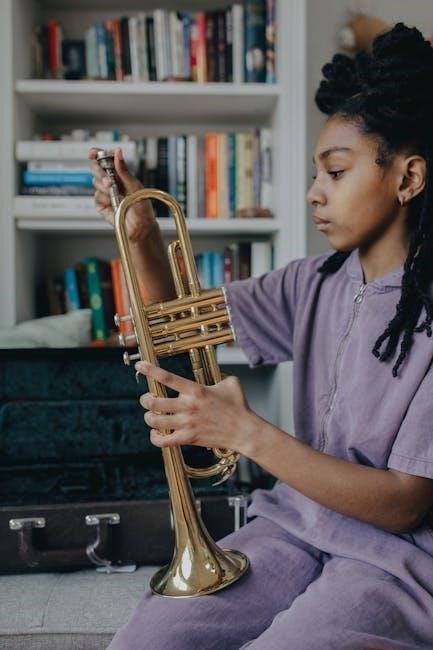
Neruda Trumpet Concerto in B-flat Major: A Comprehensive Overview
Neruda’s concerto, readily available as a PDF through IMSLP (IMSLP256670), represents a cornerstone of Baroque trumpet repertoire, published October 30, 2012.
Historical Context of Johann Baptist Georg Neruda
Johann Baptist Georg Neruda (circa 1708 – circa 1780) was a Bohemian-German composer and violinist, active during the late Baroque and early Classical periods. While not as widely recognized as contemporaries like Bach or Handel, Neruda held a significant position as a Kapellmeister (music director) in Stuttgart, Germany, for much of his career. His compositional output was prolific, encompassing orchestral suites, concertos, sonatas, and chamber music.
The availability of the Neruda Trumpet Concerto in B-flat Major PDF (accessible via IMSLP, file IMSLP256670-PMLP374266) allows modern study of his work. Neruda’s life coincided with a period of evolving instrumental techniques and musical styles. The trumpet, in particular, was undergoing transformations, moving from primarily ceremonial functions to a more prominent soloistic role. His concerto reflects this shift, showcasing the instrument’s capabilities within the Baroque framework. Understanding this historical backdrop is crucial for interpreting and performing his music authentically.
Neruda’s Contributions to Baroque Trumpet Literature
Johann Baptist Georg Neruda stands as a pivotal figure in the development of Baroque trumpet literature, largely due to the enduring popularity of his Trumpet Concerto in B-flat Major. The readily available PDF version (IMSLP256670-PMLP374266 on IMSLP) demonstrates his skillful writing for the natural trumpet – an instrument without valves, demanding exceptional lip control and technique.
Prior to Neruda, trumpet concertos were often limited in their melodic and harmonic scope. Neruda expanded these boundaries, composing a work that is both virtuosic and musically engaging. His concerto showcases a lyrical melodic style alongside demanding passages, pushing the boundaries of what was considered playable on the natural trumpet. The concerto’s accessibility, thanks to its digital preservation, continues to inspire trumpeters and scholars alike, solidifying Neruda’s legacy.
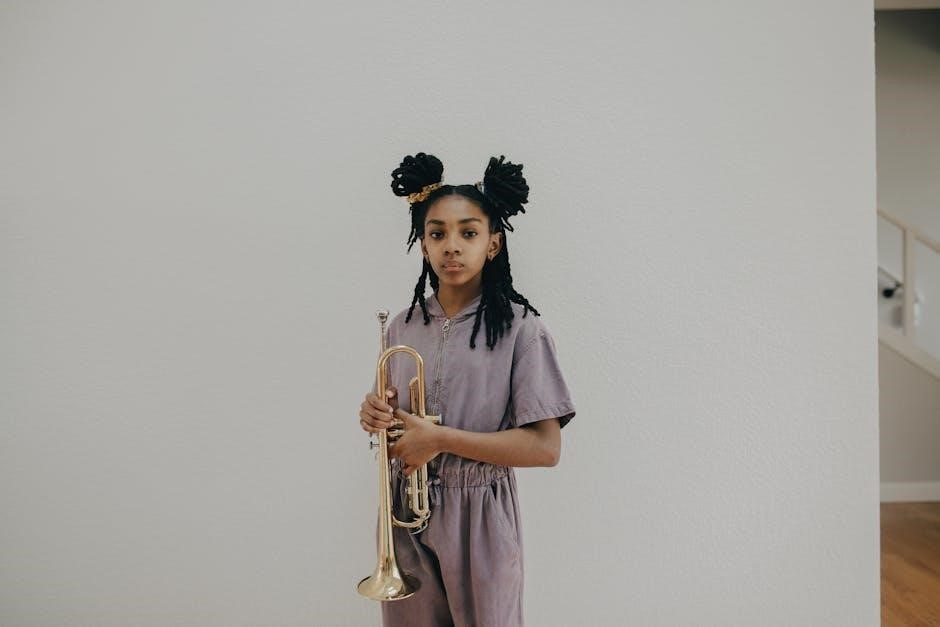
The Neruda Trumpet Concerto: General Characteristics
The Neruda Trumpet Concerto in B-flat Major, easily accessed as a PDF via IMSLP (IMSLP256670-PMLP374266), exemplifies the Baroque concerto grosso style. It’s characterized by a bright, energetic character and a clear division between solo passages and orchestral accompaniment. The concerto is scored for trumpet, strings, and continuo, creating a vibrant texture.
A defining feature is the prominent role given to the trumpet, showcasing its brilliance and agility. The Allegro movement (marked q = 100 in the PDF) is particularly notable for its rapid passages and demanding technical requirements. The work’s overall structure adheres to the typical three-movement fast-slow-fast form common in Baroque concertos, offering a balanced and engaging listening experience.

Analyzing the Musical Structure
Analyzing the Neruda concerto PDF (IMSLP256670) reveals a standard Baroque form: three movements, showcasing interplay between soloist and ensemble.
Movement I: Allegro ー Form and Key Features
The opening Allegro, accessible within the Neruda Trumpet Concerto PDF (IMSLP256670), is a vibrant display of Baroque compositional techniques. It largely adheres to a ritornello form, where the orchestral ritornello alternates with contrasting solo episodes. The key is B-flat major, providing a bright and assertive character.
Examination of the score reveals a predominantly homophonic texture, with the trumpet line taking melodic precedence. The PDF clearly shows sequences and ornamentation are abundant, typical of the period. Motivic development is also prominent, with short melodic ideas being transformed and repeated throughout the movement. The tempo, marked q = 100, suggests a brisk and energetic pace, demanding agility from the performer.
Notably, the PDF displays a clear articulation of phrases and sections, aiding in understanding the overall structure and harmonic progression of this lively first movement.
Tempo Marking and its Interpretation (q = 100)
The Neruda Trumpet Concerto PDF (IMSLP256670) explicitly indicates a tempo of q = 100 for the Allegro movement. This marking, while seemingly straightforward, requires nuanced interpretation within a Baroque performance context. Modern metronomic markings were not common during Neruda’s time, so q = 100 likely represents a relative tempo rather than an absolute one.
Historically informed performance practice suggests a flexible approach, allowing for subtle variations in tempo based on phrasing and articulation. The PDF’s notation should be considered a guideline, not a rigid constraint. A tempo of 100 quarter notes per minute encourages a lively, yet controlled, execution.
Furthermore, the clarity of the notation within the PDF allows performers to analyze the rhythmic figures and determine a tempo that best suits the character of the music.
Melodic Characteristics in the Allegro
Examining the Neruda Trumpet Concerto PDF (IMSLP256670), the Allegro movement reveals a predominantly scalar and arpeggiated melodic style, characteristic of Baroque trumpet writing. The melodic lines frequently feature sequences and ornamentation, demanding agility from the performer.
The excerpt provided within the PDF demonstrates a clear emphasis on stepwise motion interspersed with leaps, creating a balance between lyrical phrasing and virtuosic display. Repeated melodic motifs and rhythmic patterns are prevalent, contributing to the movement’s cohesive structure.
Notably, the PDF showcases the use of appoggiaturas and other ornaments, integral to the Baroque aesthetic. These embellishments should be executed with sensitivity and stylistic awareness, enhancing the melodic expressiveness. The melodic contours are generally bright and energetic, reflecting the Allegro tempo.

Technical Challenges for the Trumpet Player
The Neruda concerto PDF (IMSLP256670) presents significant demands on range, endurance, and articulation, requiring a highly skilled Baroque trumpet performer.
Range and Endurance Requirements
The Neruda Trumpet Concerto in B-flat Major, accessible as a PDF via IMSLP (IMSLP256670-PMLP374266), presents substantial challenges to the trumpet player’s technical capabilities. Specifically, the work demands considerable range, extending to high C and beyond, requiring precise embouchure control and consistent air support.
Furthermore, the concerto’s relentless pace and extended melodic lines necessitate exceptional endurance. Players must maintain a consistent tone quality and intonation throughout the piece, navigating rapid passages and demanding sustained notes. The PDF score reveals numerous opportunities for virtuosic display, but these are predicated on a solid foundation of physical stamina.
Successfully performing this concerto requires diligent practice focused on building both range and endurance, ensuring the player can confidently execute the work’s technical demands.
Articulation and Ornamentation
Examining the Neruda Trumpet Concerto PDF (IMSLP256670), articulation and ornamentation are paramount to stylistic authenticity. The Baroque period favored clear, detached articulation, often achieved through a light and precise tongue position. The score, available on IMSLP, showcases numerous opportunities for ornamentation – trills, mordents, and appoggiaturas – integral to the musical expression.
Players should carefully study the score, noting the implied or explicitly written ornaments, and execute them with finesse. Ornamentation wasn’t merely decorative; it enhanced melodic contours and harmonic interest. A nuanced understanding of Baroque articulation and ornamentation, as evidenced in the PDF, is crucial for a compelling performance.
Authentic interpretation demands a sensitive approach to these elements, bringing the music to life.
The Cadenza: Improvisation and Neruda’s Style
The Neruda Trumpet Concerto PDF (IMSLP256670) indicates a designated cadenza section, a hallmark of Baroque performance practice. Historically, cadenzas weren’t fully composed but rather opportunities for skilled performers to improvise, showcasing their virtuosity and musical understanding. Neruda’s style, as reflected in the concerto, likely encouraged such improvisational freedom.
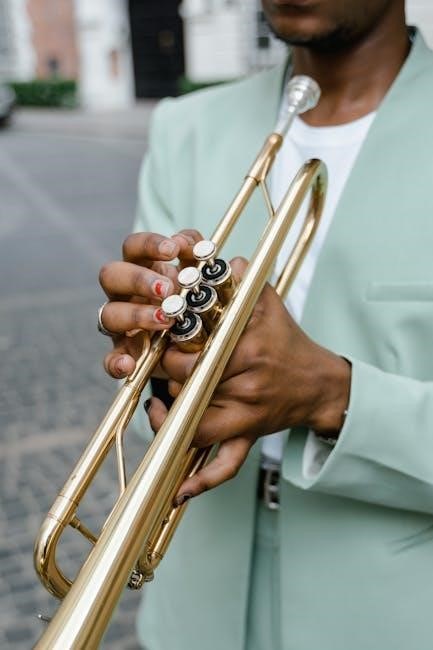
Modern performers often approach the cadenza with a blend of historical awareness and contemporary technique. While a completely improvised cadenza is challenging, incorporating elements of Baroque figuration – scalar passages, arpeggios, and ornamentation – is essential. The IMSLP score provides a foundation, but the cadenza allows for individual expression.
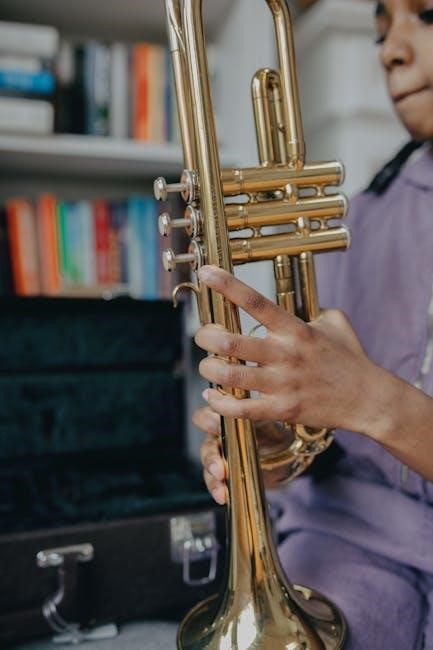
A successful cadenza complements Neruda’s compositional language.
Availability of the Score and Parts
Neruda’s Trumpet Concerto in B-flat Major is freely accessible as a PDF via the IMSLP library (IMSLP256670-PMLP374266), facilitating study and performance.
IMSLP Resource: Accessing the Neruda Trumpet Concerto PDF
Johann Baptist Georg Neruda’s Trumpet Concerto in B-flat Major is conveniently and legally available as a downloadable PDF through the International Music Score Library Project (IMSLP), specifically identified as IMSLP256670-PMLP374266-IMSLP228943-WIMA.0d0c-Ner_BbTrp.pdf. This invaluable online resource provides musicians worldwide with free access to public domain musical scores.
The PDF, published on October 30, 2012, contains both the solo trumpet part and the orchestral score, allowing for comprehensive study and performance preparation. Users can easily navigate the document, print individual pages, or save it for offline access. IMSLP offers various editions, though the primary source remains a reliable and accurate representation of Neruda’s work. Accessing this resource requires only an internet connection and a PDF reader, making it exceptionally accessible to trumpet players and ensembles of all levels. The link to the concerto is: http://conquest.imslp.info/files/imglnks/usimg/c/cc/IMSLP256670-PMLP374266-IMSLP228943-WIMA.0d0c-Ner_BbTrp.pdf
Score Variations and Editions
While the primary PDF of Neruda’s Trumpet Concerto in B-flat Major, found on IMSLP (IMSLP256670), serves as the standard, variations in editions exist, primarily concerning ornamentation and editorial markings. Some editions may include suggested fingerings or additional dynamic markings not explicitly present in the original manuscript.
Historically, transcriptions for different instrumentation have also circulated, though these deviate from Neruda’s intended scoring. The IMSLP version generally represents a clean, urtext-style edition, prioritizing fidelity to the composer’s notation. Musicians should be aware that differing editions might present slight discrepancies in notation, particularly regarding trills and appoggiaturas. Careful comparison between editions is recommended for informed performance choices. The readily available PDF from October 30, 2012, provides a solid foundation for study and performance, minimizing editorial interference.
Performance Practice Considerations
Authentic interpretation of the Neruda concerto, accessible as a PDF via IMSLP, demands adherence to Baroque trumpet techniques and stylistic conventions.
Baroque Trumpet Techniques
Performing Neruda’s Trumpet Concerto, conveniently found as a PDF on IMSLP, necessitates a deep understanding of historical performance practices. The Baroque trumpet, unlike its modern counterpart, typically lacked valves, relying instead on harmonic series and lip control to produce different pitches.
Players must master techniques like lippen vibration (lip trills) and precise articulation to navigate the concerto’s demanding passages. Ornamentation, crucial to Baroque style, should be executed with clarity and musicality, drawing inspiration from period treatises. The PDF score provides the foundational notes, but informed stylistic choices elevate the performance.
Furthermore, awareness of the natural trumpet’s limitations—and Neruda’s ingenious writing within those limitations—is paramount. Achieving a convincing Baroque sound requires careful attention to phrasing, dynamics, and overall expressive intent, all informed by scholarly research and stylistic awareness.
Appropriate Instrumentation and Ensemble Size
The Neruda Trumpet Concerto, accessible as a PDF via IMSLP, was originally conceived for a relatively small Baroque ensemble. Typically, the scoring calls for strings – often a string orchestra comprising violins, violas, and continuo – alongside the solo trumpet.
The continuo section, crucial for harmonic support, usually includes harpsichord and cello (or bassoon). Modern performances often utilize a chamber orchestra configuration, mirroring the intimate scale of Baroque ensembles. Avoid overly large orchestral forces, as they can obscure the trumpet’s melodic line.
Authentic instrumentation enhances the concerto’s character. While flexibility exists, maintaining a lean texture allows Neruda’s brilliant writing for the trumpet to shine through, as intended, and respects the historical context revealed in the PDF score.
Stylistic Interpretation and Ornamentation Choices
Interpreting the Neruda Trumpet Concerto, readily available as a PDF from IMSLP, demands a nuanced understanding of Baroque performance practice. Ornamentation, a hallmark of the era, is vital. Trills, mordents, and appoggiaturas, though not always explicitly written, were commonly added by performers.
The PDF score provides a foundation, but informed choices regarding ornamentation enhance the music’s expressive qualities. A light, articulated touch and a focus on clarity are essential. Avoid excessive vibrato, characteristic of later periods.
Dynamic contrast, while present, should be subtle. Phrasing should be elegant and rhetorical, reflecting the Baroque aesthetic. Studying recordings and treatises from the period will further inform stylistic decisions, enriching the performance.
Neruda’s Concerto in the Modern Repertoire
Neruda’s concerto, accessible as a PDF via IMSLP, remains a staple for trumpet players, frequently featured in auditions and recitals globally.
Recordings and Notable Performances
Recordings of Neruda’s Trumpet Concerto in B-flat Major are becoming increasingly prevalent, largely due to the easy accessibility of the score as a PDF through resources like IMSLP (IMSLP256670-PMLP374266). While a definitive “reference” recording remains elusive, several performances stand out for their stylistic interpretation and technical brilliance.
Historically, performances often featured natural trumpets, demanding exceptional skill from the players. Modern recordings frequently utilize modern valve trumpets, allowing for greater flexibility and accuracy. Notable performances can be found on various streaming platforms and classical music archives, showcasing diverse approaches to ornamentation and tempo. The availability of the PDF score has undoubtedly spurred increased interest in the work, leading to more frequent performances by both professional and student ensembles. Further research into specific recordings is encouraged to appreciate the nuances of this Baroque masterpiece.
Educational Value for Trumpet Students
Neruda’s Trumpet Concerto, easily accessed as a PDF via IMSLP (IMSLP256670-PMLP374266), provides invaluable educational benefits for developing trumpet players. The concerto’s technical demands – range, articulation, and ornamentation – foster significant improvement in fundamental skills.
Studying the score encourages students to explore Baroque performance practices and stylistic nuances. The availability of the PDF facilitates detailed score study and analysis. Furthermore, the concerto’s relatively concise form makes it an approachable yet challenging work for intermediate to advanced students. Working through the piece builds endurance, precision, and musicality. It also introduces students to the historical context of Baroque trumpet literature, enhancing their overall musical understanding and appreciation. The cadenza offers opportunities for improvisation and stylistic exploration.
Influence on Subsequent Trumpet Concertos
Neruda’s Trumpet Concerto in B-flat Major, readily available as a PDF through IMSLP (IMSLP256670-PMLP374266), exerted a considerable influence on the development of the trumpet concerto genre. Its clear melodic lines and technically demanding passages established a precedent for future composers.
The concerto’s structure, showcasing the trumpet’s agility and brilliance, inspired subsequent works. Composers adopted Neruda’s approach to integrating virtuosic display with musical coherence. The concerto’s accessibility, aided by the easily obtainable PDF score, ensured its continued study and emulation. It served as a foundational piece for trumpet players and composers alike, shaping the evolution of the repertoire. The influence is evident in the works of later Baroque and Classical composers who embraced similar stylistic elements and technical challenges.