

Frigidaire stoves offer diverse models – Gallery, Professional, and Classic – each requiring specific operational understanding. Accessing the correct manual, found online via model number, is crucial for safe and efficient use.
Understanding Your Frigidaire Stove Model
Identifying your specific Frigidaire stove model is the first step to unlocking its full potential. Locate the model number – typically found on a label near the oven door frame or on the back of the appliance. This number is essential for downloading the correct user manual from the Frigidaire website or other online resources.
Different series, like Gallery, Professional, and Classic, feature varying functionalities. The manual details specific features, control panel layouts, and recommended settings for your model; Understanding these nuances ensures optimal cooking performance and prevents potential issues. Referencing the manual avoids guesswork and maximizes appliance lifespan.
Safety Precautions and Warnings
Prioritize safety when operating your Frigidaire stove. Never leave the appliance unattended during use. Keep flammable materials away from the cooktop and oven. Ensure proper ventilation to prevent carbon monoxide buildup, especially with gas models.
Always allow the stove to cool completely before cleaning. Exercise caution when using the self-cleaning cycle, as it reaches extremely high temperatures. Supervise children closely around the stove. Refer to your model’s manual for specific warnings and detailed safety instructions to prevent injury or damage.
Control Panel Overview
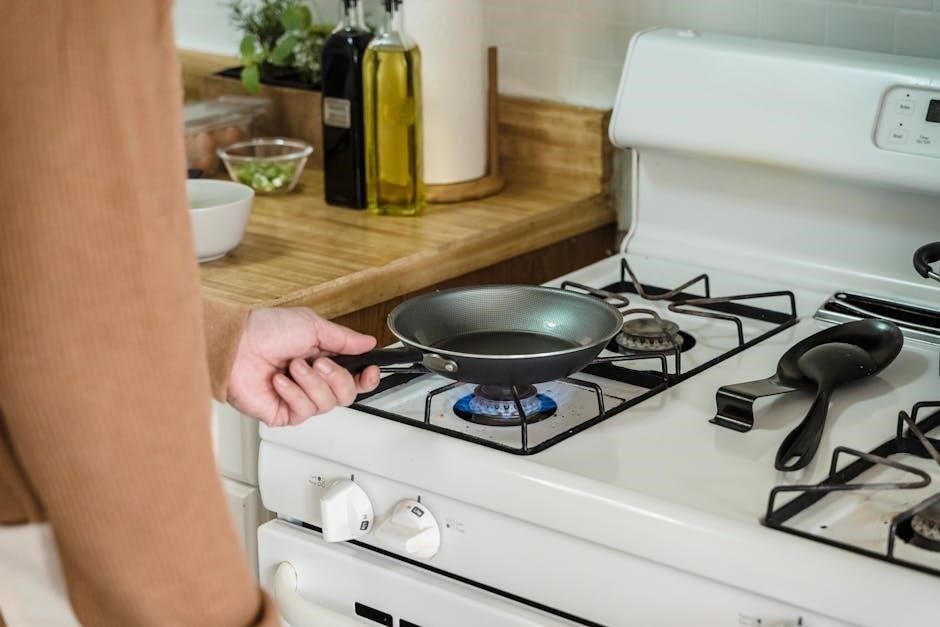
Frigidaire stoves feature digital displays and knobs for precise control. Understanding indicator lights and functions is key to operating your specific model effectively.
Digital Display Functions
Frigidaire stoves with digital displays offer a range of functionalities. These displays commonly show oven temperature, cooking mode (bake, convection, roast), and timer settings. Many models allow for delayed start programming, enabling you to set a future cooking time. Error codes are also displayed here, providing diagnostic information when issues arise. Some advanced displays feature temperature probes and recipe guidance. Navigating the display typically involves using control knobs or touch-sensitive buttons to adjust settings and confirm selections. Refer to your specific model’s manual for detailed instructions on utilizing all digital display features.
Knob Functions and Settings
Frigidaire stove knobs control various functions, including oven temperature, cooktop element selection, and timer operation. Typically, knobs have ‘off’ positions and incremental settings for precise heat control. Some knobs combine multiple functions, like selecting bake, broil, or convection modes. Digital models may utilize knobs for menu navigation and setting adjustments. Always ensure knobs are firmly set to the desired position. Refer to your model’s manual for specific knob configurations and their corresponding settings. Understanding these controls is vital for achieving optimal cooking results and safe operation.
Indicator Lights Explained
Frigidaire stoves utilize indicator lights to communicate operational status. A “Bake” light illuminates when the oven is actively baking, while “Broil” indicates broiling mode. “On” or “Heat” lights signal cooktop element activation. Some models feature a “Delay Start” light, showing a programmed start time. Error codes are often displayed via indicator lights, requiring manual consultation. A “Lock” light signifies control panel lockout. Understanding these lights ensures proper monitoring of cooking processes and prompt identification of potential issues. Refer to your specific model’s manual for a detailed light explanation.

Baking and Roasting Features
Frigidaire stoves offer conventional and convection baking modes for versatile cooking. Temperature calibration ensures accurate oven heating, vital for consistent results in roasting and baking.
Conventional Bake Mode
Conventional bake utilizes heat from the bottom element for traditional baking results. This mode is ideal for single-rack baking of items like cookies, cakes, and casseroles. Ensure proper rack placement, typically in the center of the oven, for even heat distribution. Preheating is essential before placing food inside, as indicated by the oven’s readiness signal.
For best results, avoid opening the oven door frequently during baking, as this can cause temperature fluctuations. Refer to your specific Frigidaire model’s manual for recommended temperatures and baking times for various recipes. Consistent monitoring ensures perfectly baked goods every time.
Convection Bake Mode – Benefits and Usage
Convection bake employs a fan to circulate hot air, resulting in faster and more even cooking. This mode is excellent for baking multiple racks of cookies simultaneously or roasting meats for consistent results. Reduce baking temperatures by 25°F when using convection, and check for doneness slightly earlier than conventional recipes suggest.
For optimal performance, use low-sided baking sheets to allow for proper air circulation. Avoid overcrowding the oven, as this can hinder airflow. Consult your Frigidaire manual for specific convection baking guidelines tailored to your model.
Temperature Calibration
Temperature calibration ensures your Frigidaire oven accurately reflects the set temperature. If you suspect inaccuracies, use an oven thermometer to verify the internal temperature. Many Frigidaire models allow for temperature adjustment within the control panel settings – consult your user manual for specific instructions.
Adjusting the temperature is typically done in small increments. After calibration, re-test with the thermometer to confirm accuracy. Consistent calibration leads to more reliable baking and roasting outcomes, preventing undercooked or overcooked dishes.

Cooking with the Cooktop
Frigidaire cooktops feature coil, smooth top, or radiant elements. Understanding heat settings and element types is key for efficient and safe cooking practices.
Element Types: Coil, Smooth Top, and Radiant
Frigidaire cooktops utilize various element types, each with unique characteristics. Traditional coil elements are cost-effective and visibly show heat levels, though cleaning can be more involved. Smooth top elements, often ceramic glass, offer even heating and a sleek appearance, requiring specific cleaning products to avoid damage.
Radiant elements, also found on smooth tops, heat quickly using infrared light. Understanding your stove’s element type is crucial for optimal cooking performance and proper maintenance. Always refer to your specific model’s manual for detailed instructions regarding element usage and care.
Understanding Heat Settings
Frigidaire cooktops typically feature numbered heat settings, often ranging from 1 (low) to 10 (high), though specific ranges vary by model. Lower settings are ideal for simmering and gentle warming, while higher settings are best for boiling and searing.
Some models include “power” or “boost” features for rapid heating. It’s essential to match the heat setting to the recipe and cookware type. Always consult your user manual for detailed guidance on heat level recommendations and safe cooking practices for optimal results.
Using the Warming Drawer (if applicable)
Frigidaire stoves may include a warming drawer, designed to keep cooked foods at serving temperature. Activate the warming drawer using the control panel; temperature settings are usually adjustable. This feature is perfect for holding side dishes or keeping meals warm until ready to serve, preventing food from cooling down.
Avoid using the warming drawer for prolonged storage or to reheat cold foods. Always refer to your specific model’s manual for detailed instructions and safety guidelines regarding warming drawer operation.
Self-Cleaning Cycle
Frigidaire stoves feature a self-clean cycle for convenient oven maintenance. Preparation involves removing racks and loose debris before initiating the high-temperature cleaning process.
Preparing for the Self-Clean Cycle
Before initiating the self-clean cycle on your Frigidaire stove, thorough preparation is essential for optimal results and safety. Remove all baking racks, cookware, aluminum foil, and any other items from within the oven cavity. Wipe up any large spills or loose debris from the oven floor, as these can create smoke during the high-heat cleaning process.
Ensure the oven door has a proper seal. Check for any obstructions that might prevent the door from closing completely. It’s also advisable to ventilate the kitchen by opening windows, as the self-clean cycle can produce odors. Finally, disconnect any automatic timers or programmed settings before starting the cycle.
Self-Clean Cycle Operation and Duration
To begin the self-clean cycle, press the “Self-Clean” button on your Frigidaire stove’s control panel. You may be prompted to select a cleaning duration, typically ranging from 2 to 4 hours, depending on the soil level. The oven door will automatically lock for safety during the high-temperature cleaning process.
Avoid opening the oven door until the cycle is complete and the oven has cooled down. The duration varies by model, but generally, a full cycle takes between 3 and 5 hours, including cooling time. Do not use the oven during the self-clean cycle.
Post-Self-Clean Procedures
After the self-clean cycle completes and the oven has fully cooled, the door lock will automatically release. A small amount of ash may remain; wipe it away with a damp cloth. Ensure proper ventilation by opening windows, as the process can produce odors.
Inspect the oven interior for any damage. If a lingering smell persists, run a regular bake cycle at a low temperature for 15-20 minutes. Avoid using oven cleaners immediately after a self-clean cycle.
Troubleshooting Common Issues
Common problems include heating failures and error codes. Consult your Frigidaire stove’s manual for specific code definitions and troubleshooting steps for cooktop malfunctions.
Stove Not Heating
If your Frigidaire stove isn’t heating, first verify the power supply – check the circuit breaker or fuse box. Ensure the control panel is not locked. Next, examine the element; a broken element won’t heat. Consult the user manual for your specific model to locate element replacement instructions.
For electric stoves, a faulty igniter or heating element is a common cause. Gas stoves may have issues with the gas supply or igniter. Error codes displayed on the digital display can pinpoint the problem; refer to the manual’s error code section for diagnosis. If issues persist, contact Frigidaire customer support.
Error Codes and Their Meanings
Frigidaire stoves utilize error codes to signal malfunctions, aiding in troubleshooting. These codes, displayed on the digital panel, require referencing your specific model’s manual for accurate interpretation. Common codes relate to temperature sensor failures, igniter issues, or control board errors.
For example, an “F2” code might indicate a communication error, while “E0” could signal a faulty temperature sensor. Ignoring error codes can lead to further damage. Always consult the manual before attempting repairs, and contact Frigidaire support if unsure.
Cooktop Element Malfunctions
Cooktop element failures on Frigidaire stoves often manifest as a lack of heat or inconsistent heating. Common causes include a broken heating element, a faulty element switch, or wiring issues. Before troubleshooting, ensure the element is properly seated and receiving power.
If an element doesn’t heat, check the breaker. If the breaker is fine, consult your model’s manual for testing procedures. Replacing a faulty element is often a straightforward DIY repair, but always disconnect power first.

Care and Maintenance
Regular cleaning of the cooktop and oven interior extends your Frigidaire stove’s lifespan; Promptly address spills and follow the manual’s specific cleaning guidelines.
Cleaning the Cooktop
Maintaining a clean cooktop ensures optimal performance and prevents stubborn residue buildup. For smooth top models, allow the surface to cool completely before cleaning. Use a Frigidaire-approved cooktop cleaner and a soft cloth or sponge; avoid abrasive cleaners that can scratch the surface. Coil element cooktops require removing the coils and drip pans for thorough cleaning with warm, soapy water.
Always ensure drip pans are completely dry before replacing them. For radiant cooktops, wipe up spills immediately to prevent burning. Refer to your specific model’s manual for detailed cleaning instructions and recommended products, as cleaning procedures can vary.
Cleaning the Oven Interior
Regular oven cleaning maintains cooking performance and hygiene. For models without the self-clean feature, use a non-abrasive oven cleaner, following the product’s instructions carefully. Ensure adequate ventilation during application. Wipe down interior surfaces with a damp cloth after cleaner removal.
For self-cleaning ovens, refer to the “Self-Cleaning Cycle” section of your manual. Avoid using commercial oven cleaners during a self-clean cycle. Always remove racks and accessories before initiating the self-clean process, as discoloration may occur.
Replacing Oven Bulbs
To replace the oven bulb, always disconnect the power to the stove at the breaker or fuse box to prevent electrical shock. Locate the bulb access panel, typically at the back of the oven interior. Unscrew the old bulb – it may require a specific tool or simply unscrewing by hand.
Install a new oven bulb of the correct wattage, as specified in your model’s manual. Reattach the access panel and restore power. If the bulb doesn’t illuminate, double-check the connection and bulb type.
Specific Model Series Guides
Frigidaire offers tailored instructions for Gallery, Professional, and Classic series stoves, ensuring optimal performance and addressing unique features within each line.
Frigidaire Gallery Series Instructions
Frigidaire Gallery Series stoves boast advanced features like SmudgeProof™ Stainless Steel and Quick Preheat. Consult your model’s manual for detailed guidance on utilizing these innovations. Understanding the digital display and control panel is key; explore baking, roasting, and cooktop functionalities.
Pay close attention to convection bake settings for even cooking. The manual provides specific instructions for self-cleaning cycles, ensuring proper preparation and post-clean procedures. Troubleshooting sections address common issues, including error codes and element malfunctions. Regular cleaning, as outlined in the manual, maintains optimal performance and longevity.
Frigidaire Professional Series Instructions
Frigidaire Professional Series stoves deliver powerful performance and precise control. Your user manual is essential for maximizing these capabilities. Familiarize yourself with the advanced control panel, including temperature probe usage and specialized cooking modes. Detailed instructions cover convection, broiling, and baking functions for professional-quality results.
The self-clean cycle requires careful preparation; the manual outlines necessary steps. Troubleshooting guides address potential error codes and cooktop element issues. Consistent cleaning, as detailed in the manual, ensures peak performance and extends the stove’s lifespan.
Frigidaire Classic Series Instructions
Frigidaire Classic Series stoves offer reliable, straightforward cooking. Your owner’s manual provides essential guidance for optimal operation. Understand the basic knob functions and indicator lights for safe and efficient use. Detailed instructions cover conventional baking and cooktop element settings, ensuring consistent results;
The manual also details proper cleaning procedures for both the cooktop and oven interior. Familiarize yourself with troubleshooting tips for common issues like heating problems. Regular maintenance, as outlined, will prolong your stove’s life and performance.
Installation Guidelines
Proper installation requires adherence to electrical requirements and securing the anti-tip bracket. Leveling the stove ensures stable and safe operation, as detailed in the manual.
Electrical Requirements
Frigidaire stoves necessitate specific electrical configurations for optimal performance and safety. Most electric models require a dedicated 240-volt electrical circuit, typically utilizing a NEMA 14-50R receptacle.
Confirm your home’s electrical system meets these demands before installation; improper wiring can lead to hazards. The manual details amperage requirements based on the specific model.
Always consult a qualified electrician for installation to ensure compliance with local electrical codes and a secure connection. Never attempt electrical work if you are not professionally trained.
Anti-Tip Bracket Installation
Crucially, all Frigidaire stoves must be secured with the provided anti-tip bracket to prevent accidental tipping and potential injury. This bracket anchors the stove to the rear wall, ensuring stability.
The installation process, detailed in your model’s manual, involves attaching the bracket to a wall stud using appropriate screws (often not included due to varying wall types).
Proper installation is non-negotiable for safety; regularly verify the bracket’s secure attachment. Ignoring this step poses a significant hazard, especially with children present.
Leveling the Stove
Ensuring your Frigidaire stove is perfectly level is vital for optimal cooking performance and safety. An uneven stove can cause uneven heating, boiling over, and potential instability.
Adjustable legs, located at each corner of the stove, allow for precise leveling. Use a spirit level placed on the cooktop to check for balance, and rotate the legs to raise or lower each corner.
Re-check the level after each adjustment until the stove sits firmly and doesn’t wobble. A properly leveled stove enhances both functionality and longevity.

Warranty Information
Frigidaire stoves come with a limited warranty covering parts and labor. Review your specific model’s warranty details for duration and claim procedures.
Understanding Your Frigidaire Warranty
Frigidaire appliance warranties vary by model and purchase date, typically covering one year for parts and labor. Extended warranties are often available for purchase, offering broader protection. The warranty safeguards against manufacturing defects, not damage from misuse or improper installation.
Carefully review the warranty documentation included with your stove, or find it online using your model number. Understanding the terms ensures you know what’s covered and for how long. Keep your proof of purchase readily available, as it’s required for any warranty claim.
How to File a Warranty Claim
To initiate a Frigidaire warranty claim, gather your model number, serial number, proof of purchase, and a detailed description of the issue. Contact Frigidaire Customer Support via phone or their website to receive a claim number and instructions.
You may be asked to provide photos or videos demonstrating the defect. An authorized service technician might be dispatched to assess the problem. Keep all communication records and documentation throughout the claim process for your reference.
Contacting Frigidaire Customer Support
For assistance with your Frigidaire stove, reach out to their dedicated customer support team. You can find contact information – including phone numbers and online chat options – on the official Frigidaire website. Prepare your model and serial number for quicker service.
Their website also features a comprehensive FAQ section and troubleshooting guides. Utilizing these resources may resolve your issue promptly. For warranty claims or complex problems, direct contact with a representative is recommended.